Conversation with Outside Directors
Governance for Sustainable Growth and Future Value Creation
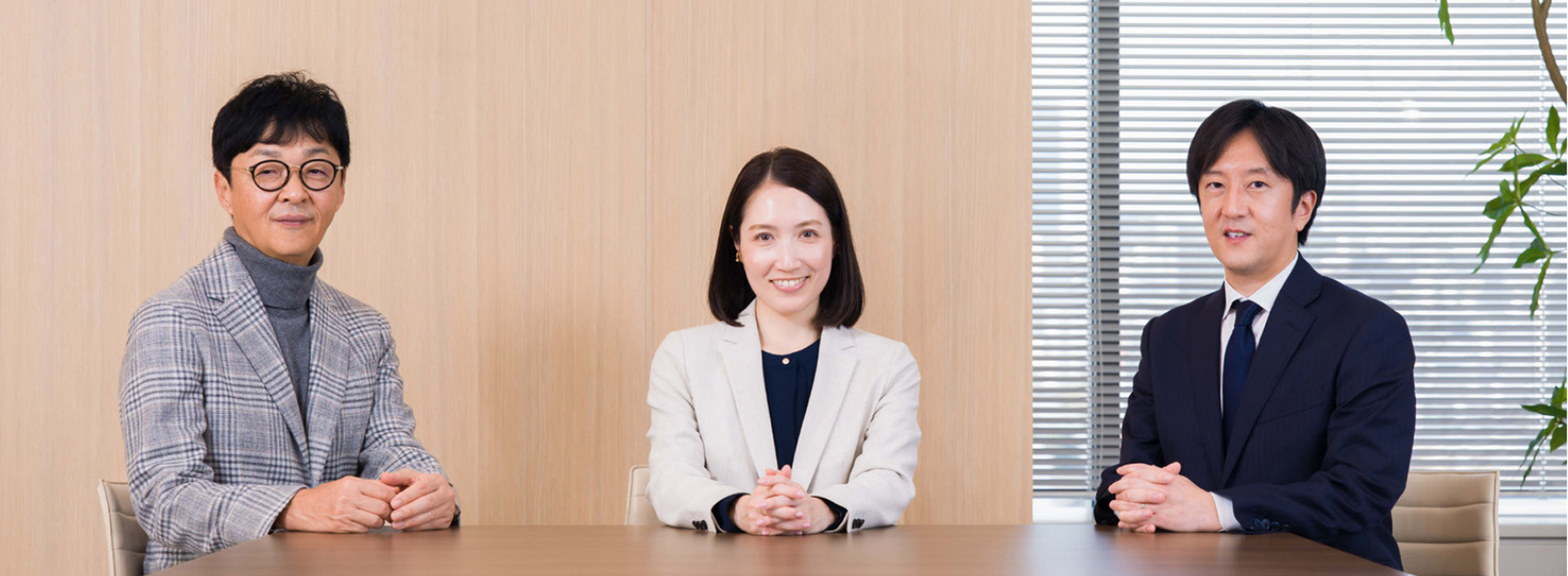
We asked Outside Directors Hironori Suzuki, Munehiro Ishida (Audit Committee Member), and Ako Iida (Audit Committee Member) about the key drivers of value creation and sustainable growth at the MTG Group.
Roles and responsibilities as Outside Directors and Audit Committee Members
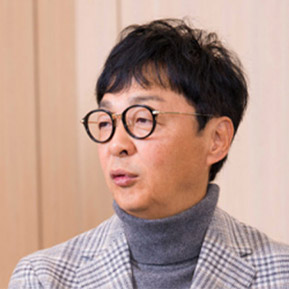
Outside Director
Expert in IT, M&A, and global management
― Thank you for your time today. First, could you tell us about your roles and responsibilities?
Iida: I strive to see things from a shareholder perspective. Outside directors with accounting backgrounds are often perceived as being "defensive" and risk-averse, but it is important not to hold back growth by being too cautious. Balancing growth and governance – or "attack and defense" – while maintaining the objectivity expected of an oversight role is important at a company with the MTG Group's "startup spirit."
Suzuki: President Matsushita is not looking for people who simply agree with everything he says. Drawing on my experience in IT, M&A, and international business, my role is to provide objective, rigorous advice from a shareholder perspective. Successful global expansion depends on creating environments in which local talent is trusted, empowered, and able to thrive.
Ishida: As a lawyer, candidness is important to me, but I always try to offer practical alternatives rather than simply an opposing viewpoint. Every business initiative is fueled by our employees' passion and commitment. Rather than dismissing proposals because of minor risks, I try to be constructive and move ideas forward.
Effectiveness of the MTG Group's governance and decision-making
― Decision-making at the MTG Group is extremely swift. How effective is its governance?
Suzuki: I joined MTG in December 2025. I was surprised by how much preparation goes into Board discussions and the clarity with which key issues are identified and debated. It was impressive to see President Matsushita spend a full hour explaining the business at the AGM. It showed he understands the importance of shareholders.
Ishida: Board meetings are conducted with great seriousness in an atmosphere where directors can speak candidly. Although Outside Directors do not constitute a majority of the Board, there is a strong culture of ensuring all directors' concerns are fully addressed and that decisions are not rushed. For important matters, relevant departments brief us several days before the Board meeting, ensuring we understand the issues and can raise any concerns we have. The Audit Committee rigorously reviews risks, helping achieve both effective governance and swift decision making.
Iida: Integrating oversight and decision-making functions creates an efficient, rational governance framework. Before Board meetings, the Audit Committee develops a shared understanding of the risks to address. Close coordination with the full-time Audit Committee Members provides valuable insights into frontline operations and practical considerations, strengthening our oversight. MTG is very transparent in sharing information.
Specific discussions and decision-making processes in FY2025
― Did any discussions or decision-making processes leave an impression on you in FY2025?
Ishida: The M&A transaction was particularly memorable. We did our due diligence and carefully reviewed each stage of the process. Over several months, we consulted financial, taxation, and legal experts, ensuring we reached an objective, well-informed decision. Thorough preparation by the secretariat, opportunities for additional explanations, and our practice of postponing decisions that required more deliberation further enhanced the quality of Board meetings.
Suzuki: Discussions regarding M&A stand out the most. I believe M&A can be compared to a marriage. When you acquire a company, you are embracing its people, culture, and history, so it's important to look beyond the numbers and assess values and cultural fit. The new owner should not think of themselves as superior; rather, it should approach the relationship with humility and respect. I hope we can enhance what I call "post-acquisition governance," including IT integration and the unification of security standards.
Iida: The M&A transaction shortly after I assumed this role was particularly memorable. By reviewing processes from a shareholder perspective and doing our financial and tax due diligence, we reached an objective decision. Post-acquisition internal control was discussed in advance from the standpoint of consolidated governance, which reinforced my confidence in the quality of the MTG Group's decision-making processes.
Suzuki: I was also impressed by the discussions on system integration. Given the differences in business models, complete system integration may be unrealistic; but clarifying the essential systems, such as HR, for which infrastructure should be unified and security standards defined on a Group-wide basis is important for mitigating risks.
Role of the Board of Directors in enhancing corporate value
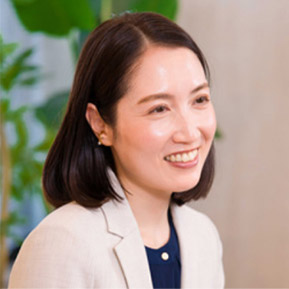
Outside Director and Audit Committee Member
CPA and expert on internal control
Iida: As an Outside Director, I draw on my expertise in finance and accounting to rigorously assess potential risks, and ensure decisions are not based on overly optimistic assumptions. I'm conscious of being supportive of the major investments being made in the MTG Group's growth, while still remaining objective. In terms of internal control, I constantly seek opportunities to improve existing frameworks and establish new ones where needed. Going forward, I will continue to identify potential issues at an early stage and coordinate with relevant departments to help ensure ongoing growth in corporate value.
Ishida: While remaining vigilant for compliance issues and significant risks, I actively participate in discussions on investments and new business development. Because the Company makes decisions so quickly, I also make sure to respond quickly. At the same time, certain matters, such as major investments, require more careful deliberation. The involvement of external experts in reviewing and advising on such decisions has contributed to the success of these initiatives, something I found very rewarding.
Suzuki: I continuously engage management by asking questions and identifying opportunities for improvements in areas such as M&A decision-making processes, IT security, and employee development. By doing so, I hope to make meaningful contributions that will be reflected in the Company's future results, without the need to draw attention to it myself.
Future potential and value creation: The Hikari Philosophy and MTG's distinctive strengths
― How do you view the MTG Group's future potential and the strengths that differentiate it from competitors?
Suzuki: The MTG Group operates in clothing, food, lifestyle, and beauty – areas that will remain fundamentally important even in the age of AI. What sets the Company apart is not only its ability to develop products, but also its proven capabilities in building sales and distribution channels with customer-facing businesses like hotels and salons, combined with sophisticated branding know-how. This is not something that can easily be replicated by competitors
Iida: The biggest strength of the MTG Group is its corporate philosophy, with the Hikari Philosophy at its core. These principles are not mere lip service; they are deeply embedded in the mindsets of employees and reflected in their day-to-day interactions. As a result, despite the rapid growth in headcount, there remains a strong sense of unity across the entire organization – almost like that of a family. I believe this is a major advantage over other companies.
Ishida: I'm impressed that the Group Management System has fostered an ownership mindset among employees at every level. Because the Company's philosophy is translated into action with such energy and commitment, it has a remarkable ability to deliver attractive products to people everywhere.
Communicating with stakeholders and deepening engagement
― Outside Directors play an important role in overseeing management from the perspective of stakeholders. What are your views on communicating with stakeholders, deepening engagement, and building trust and credibility with the general public?
Iida: Currently, information is provided to investors primarily via disclosures. We place great importance on fair disclosure that supports informed investment decisions by communicating not only favorable information but also challenges and risks. Looking ahead, alongside financial disclosures, I hope we can provide trusted and transparent communications by carefully explaining how our sustainability efforts create synergies with core businesses and contribute to our competitive advantages.
Ishida: In terms of contributing to society, I was impressed by the Company's leading role in establishing industry standards. I find great significance in its commitment to promoting the healthy development of the industry as a whole by bringing safe and effective products to market, including fine bubble technologies and recovery wear like ReD, which is classified as a general medical device.
Suzuki: Social contribution can be difficult to define. I believe its essence lies in contributing to the local community and supporting the development of the industry. In this sense, MTG's efforts to communicate its vision through the new headquarters being constructed in Atsuta, Nagoya, as well as its willingness to openly share its initiatives and take a leading role in advancing the industry as a whole, are very meaningful. Directors themselves are leading the way on these efforts, and I look forward to seeing them continue to evolve in the years ahead.
Future challenges: Key management and corporate governance priorities
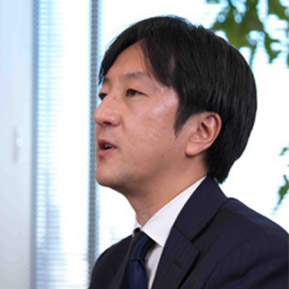
Outside Director and Audit Committee Member
Lawyer and expert in finance and M&A
― What do you see as the key management and governance challenges facing the MTG Group?
Iida: There are two key priorities. The first is succession planning. It is important that the Company does not become overly dependent on specific individuals and that it systematically cultivates the next generation of leaders capable of ensuring stability and continuity. The second is sustainability. While MTG is still in the process of setting targets, it will become increasingly important for all employees to develop a genuine understanding of sustainability and recognize how it connects with the growth of the core business.
Ishida: It is also important to enhance the role and visibility of corporate functions. In a fast-growing company, attention gravitates toward sales and operating departments, but corporate functions provide the foundation supporting that growth. I hope to continue discussions with President Matsushita on how MTG can build evaluation and recognition systems that help prevent burnout among those working in corporate functions and encourage them to take greater pride in their contributions. Regarding subsidiary management and Group governance, we need to balance head-office oversight and local autonomy.
Suzuki: Streamlining operations through IT is also essential. Beyond the introduction of IT infrastructure, it is equally important to train employees to embrace the new systems. Senior management should spend more time visiting corporate and administrative departments to observe operations firsthand. Such efforts contribute to effective governance and oversight.
Message to stakeholders
― Finally, would you like to share a message with our stakeholders?
Iida: The MTG Group has achieved remarkable growth, and the organization continues to evolve with each passing day. As the Company expands, strengthening internal controls and governance becomes increasingly important. Controls are not static frameworks; they are "living organisms" that must evolve alongside the Company. As an Audit Committee Member, I will continue to provide advice and support as needed to help build and maintain appropriate governance structures.
Suzuki: The first time I attended a Board meeting, I was struck by President Matsushita's discussion of what the Company should look like 20 years from now. His long-term perspective on management is impressive. Drawing on my experience in IT, M&A, and international business, I hope to contribute to building a foundation for future growth. I also hope to remain healthy enough to witness the Company evolve over the coming decades.
Ishida: I believe our priority is to establish frameworks that prevent misconduct and enable risks to be properly identified. I hope to support the Company in pursuing challenging investment opportunities by helping to weigh the impact of potential risks. My motto is "cool head, but warm heart." I am serious about my work, but also empathetic. By balancing levelheaded judgment with a human touch, I try to be a supportive presence. Underpinning this is the concept of VITAL – creating value that brings energy and vitality to people's lives.